



Privacy and data protection, made clear
Cerivo helps you manage GDPR and privacy compliance in one connected system - including your Record of Processing Activities (RoPA), Data Protection Impact Assessments (DPIAs), data subject requests, vendor risk, and supporting documentation - so your team can stay in control, reduce manual effort, and demonstrate compliance with confidence.
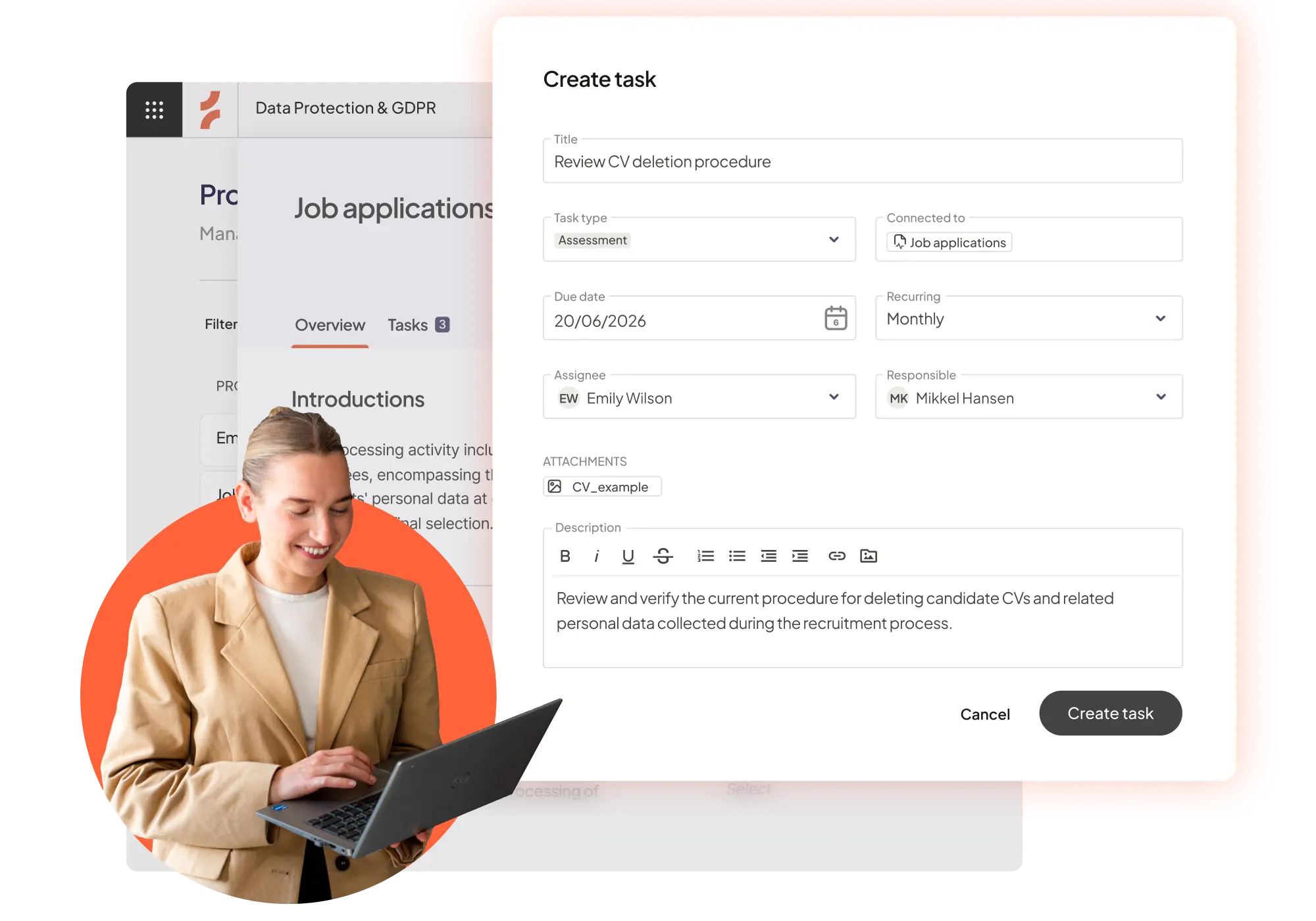
Stay in control of your privacy program
Privacy work often spreads across documents, spreadsheets, and disconnected tools. Records go out of date, processes vary between teams, and reporting becomes time-consuming.
Cerivo brings your privacy and data protection work into one clear system. You can map processing activities, manage risk, handle requests, and keep documentation up to date, without losing oversight.
When everything is connected, it becomes easier to stay compliant and show it.
What Cerivo helps you do

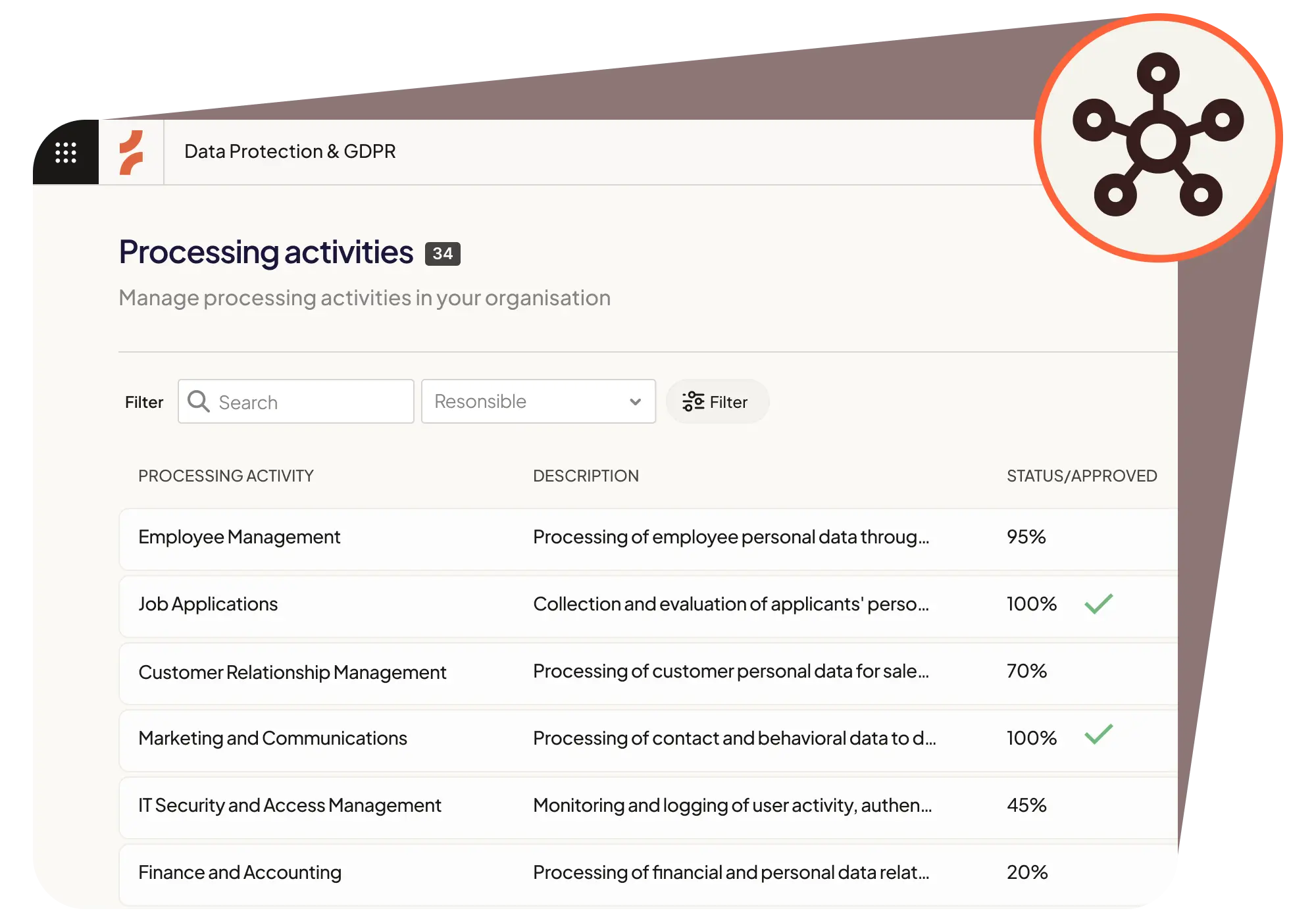
Maintain a clear record of processing activities
Build and maintain your Record of Processing Activities (RoPA) as required under Article 30 of GDPR. Keep processing purposes, legal bases, data categories, systems, and retention periods in one place — structured for audits and always up to date.

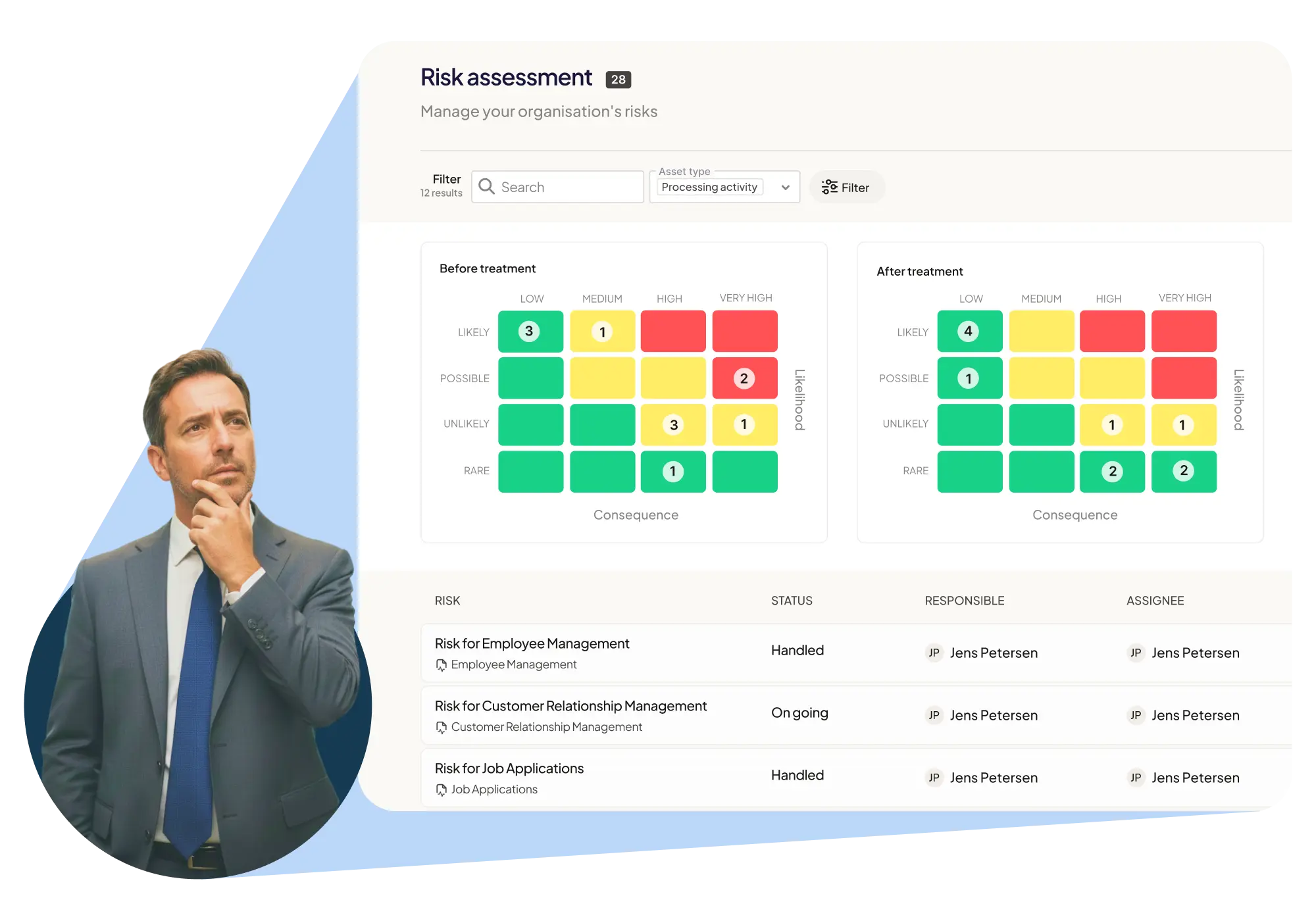
Understand and manage privacy risk
Connect risks to specific processing activities, systems, and vendors. Assess likelihood and consequence, implement mitigating controls, and document residual risk — so your team can demonstrate accountability under Article 5(2).

Run DPIAs with structure and consistency
Conduct Data Protection Impact Assessments as required by Article 35 for high-risk processing. Cerivo guides you through a consistent process, captures decisions, involves the right stakeholders, and maintains a complete audit trail.

Manage vendors and data processors
Maintain a register of data processors and sub-processors as required by Article 28. Track Data Processing Agreements, review cycles, and third-party risk — linked directly to the processing activities each vendor supports.

Handle data subject requests with confidence
Manage rights requests under GDPR Chapter III — including access (Article 15), erasure (Article 17), and portability (Article 20). Assign ownership, track the one-month response deadline, and document outcomes for every request.

Keep policies and documentation up to date
Store, version, and distribute privacy policies and procedures in one place. Track confirmation and adoption across your organization — so you can demonstrate compliance with accountability obligations under Article 5(2), not just describe it.
Built for how privacy work actually happens
Privacy is ongoing. It involves multiple teams, changing requirements, and constant updates.
Cerivo is designed to support that reality
With one connected platform, you can:
- Map processing activities across the organization
- Link systems, vendors, and data flows
- Assess and track privacy risk
- Run DPIAs and document decisions
- Manage data subject requests
- Maintain policies and supporting documentation
- Monitor progress and follow up on actions
This reduces fragmentation and helps your team stay aligned.
From documentation to decision-making
Privacy programs often become documentation-heavy, but hard to act on.
Cerivo helps shift the focus.
By connecting activities, risks, controls, and ownership, your team gets a clearer view of where attention is needed. That makes it easier to prioritize work, respond to changes, and support better decisions across the business.
Reporting that builds confidence
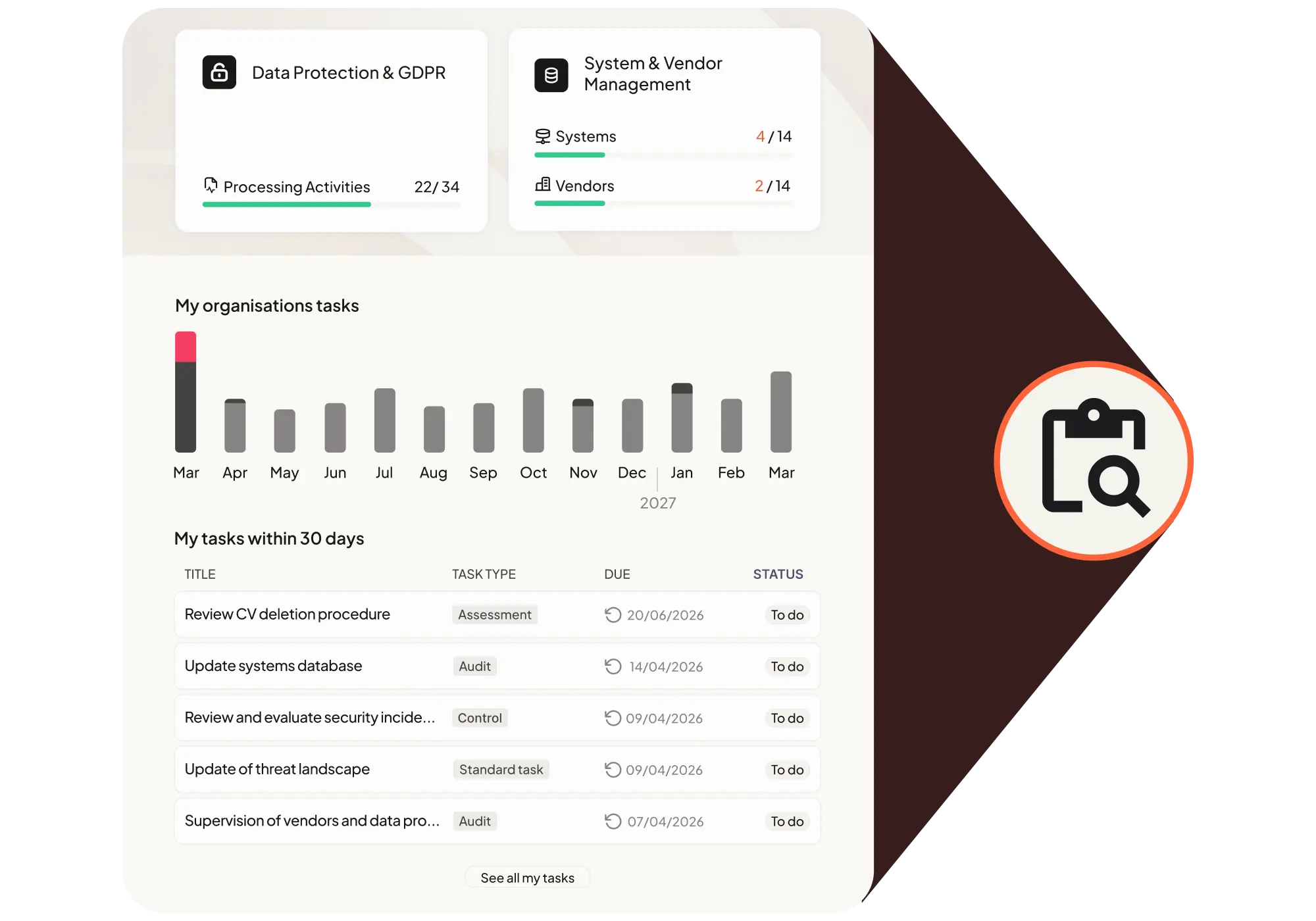
When regulators, auditors, or leadership ask for status, the answer should be clear.
Cerivo brings together your privacy data into one place, so you can:
- Show the status of processing activities
- Demonstrate risk assessments and mitigation
- Track DPIA progress
- Report on vendor risk
- Document how requests are handled
Clear reporting makes it easier to prove compliance, not just describe it.
Key capabilities
RoPA management
Meet your Article 30 obligation to maintain a Record of Processing Activities (RoPA). Map activities, legal bases, data categories, and systems in one place — structured for audits and always up to date.
DPIA workflows
Conduct Data Protection Impact Assessments (DPIAs) as required under Article 35 for high-risk processing. Cerivo gives you a consistent process, clear ownership, and a complete audit trail from start to decision.
Risk management
Identify and document privacy risks tied to specific processing activities, systems, and vendors. Assess likelihood and consequence, implement mitigations, and track residual risk — all connected to your broader compliance program.
Vendor oversight
Maintain a complete register of data processors and sub-processors under Article 28. Track agreements, review cycles, and third-party risk — and link vendors directly to the processing activities they support.
Data subject request management
Handle data subject rights requests under GDPR Chapter III — including access (Article 15), erasure (Article 17), and portability (Article 20). Assign ownership, track the 30-day deadline, and document outcomes for every request.
Policy and document management
Store, version, and distribute privacy policies, procedures, and supporting documentation in one place. Track who has read and confirmed each policy — so you can demonstrate adoption, not just publication.
Data mapping
Map how personal data moves across systems, departments, and vendors. Understand what data is processed, where it goes, and on what legal basis — giving you the foundation for accurate RoPA entries and DPIA scoping.
Integrations and access
Connect Cerivo to your existing tools via pre-built integrations and a public API. Supports SSO and user provisioning for access control — so compliance work fits into how your team already operates.
One platform. Clearer privacy management.
Cerivo brings privacy, risk, and compliance work into one connected system, so your team can stay organized, reduce manual effort, and operate with confidence.
Know where you stand. Act on what matters. Stay ready for what’s next.
What is GDPR compliance software?
GDPR compliance software helps organizations meet their obligations under the General Data Protection Regulation (EU) 2016/679 and related national data protection laws.
It typically covers the following areas — all of which Cerivo handles in one connected platform.

Maintaining a Record of Processing Activities (RoPA) under Article 30

Running Data Protection Impact Assessments (DPIAs) as required by Article 35

Managing data subject requests (DSRs) under Chapter III — including access, erasure, and portability

Documenting legitimate interest assessments (LIAs) and legal bases for processing

Tracking vendor and data processor agreements

Maintaining policies, procedures, and audit-ready documentation
Frequently asked questions about GDPR compliance
What is a Record of Processing Activities (RoPA) and who needs one?

A Record of Processing Activities (RoPA) is a written record of all personal data processing carried out by an organization. Under Article 30 of GDPR, organizations with 250 or more employees are required to maintain one — though most smaller organizations with regular or high-risk processing activities are also required to comply. The RoPA must include the purposes of processing, data categories, recipients, retention periods, and any transfers to third countries. Cerivo helps organizations build and maintain their RoPA in a structured format, linked to the systems and vendors involved in each activity.
Under Article 35 of GDPR, a DPIA is required before carrying out any processing that is 'likely to result in a high risk' to individuals. This typically includes large-scale processing of sensitive data, systematic monitoring of public areas, and use of new technologies. Supervisory authorities publish lists of processing types that always require a DPIA. Cerivo provides a structured DPIA workflow that guides teams through the assessment process, captures decisions, and maintains a complete audit trail.
A data controller is the organization that determines the purposes and means of processing personal data. A data processor is a third party that processes personal data on behalf of the controller — for example, a cloud software provider or payroll service. Under GDPR, controllers must have a written agreement (a Data Processing Agreement, or DPA) in place with each processor, as required by Article 28. Cerivo helps organizations maintain a register of processors, track DPA status, and link processors to the relevant processing activities.
GDPR grants individuals several rights over their personal data, including the right to access (Article 15), the right to erasure (Article 17), the right to rectification (Article 16), and the right to data portability (Article 20). Organizations must respond to most requests within one month. Cerivo provides a data subject request (DSR) management workflow that tracks intake, assigns ownership, monitors the response deadline, and documents outcomes — so nothing is missed and every response is auditable.
A legitimate interest assessment is a structured three-part test used to determine whether an organization can rely on legitimate interest (Article 6(1)(f)) as the legal basis for processing personal data. The test covers: whether there is a genuine legitimate interest, whether the processing is necessary for that interest, and whether the individual's rights override that interest. Organizations should document the outcome of each LIA as part of their accountability obligations under Article 5(2).
Data Protection Officers (DPOs) and privacy teams typically need to maintain: a RoPA under Article 30, DPIA records for high-risk processing under Article 35, data breach logs and notification records under Articles 33 and 34, processor agreements under Article 28, consent records where applicable, and evidence of policy adoption and staff awareness. Cerivo brings all of this into one platform, making it easier to produce evidence on request — from regulators, auditors, or internal stakeholders.
Yes. GDPR applies to any organization that processes the personal data of individuals in the EU, regardless of where the organization itself is based. This is known as the extraterritorial scope of GDPR, established in Article 3. It applies when an organization offers goods or services to EU residents, or when it monitors the behavior of EU residents. Non-EU organizations handling EU personal data must comply with GDPR obligations in the same way as EU-based organizations.
GDPR (General Data Protection Regulation) governs the processing of personal data and protects individual privacy rights. NIS2 (Network and Information Security Directive 2) focuses on cybersecurity — specifically the security of network and information systems across critical sectors and essential services. While they overlap in areas like breach notification and risk management, they are distinct obligations with different scopes. Many organizations subject to NIS2 are also subject to GDPR, and Cerivo supports compliance with both frameworks within a single platform.